

What is postpartum
depression (PPD)?

Learn more about postpartum depression (PPD), including the signs and symptoms of PPD and how it differs from the “baby blues.“

Postpartum depression (PPD) is a mood disorder with symptoms that can occur during pregnancy or anytime within the first 12 months after giving birth. It is different from the "baby blues," which usually gets better within 2 weeks without treatment. Only a healthcare provider can tell you if what you are feeling is more than the "baby blues." That's why it's important to discuss all your symptoms with your healthcare provider right away.
How common is postpartum depression?
Approximately 1 in 8 women in the US experience symptoms of PPD after giving birth. It's one of the most common medical conditions associated with pregnancy—even more common than gestational diabetes.
What are the symptoms of postpartum depression?
PPD can cause a mix of emotional, physical, and behavioral symptoms. While many women can feel sad or overwhelmed initially, postpartum depression symptoms are more intense and last longer; but they are treatable and should be discussed with your healthcare provider.
 Some women may experience a number of emotional symptoms, including:
- Persistent sad or “empty” mood
- Loss of interest or pleasure in daily activities
- Irritability or frustration
- Feelings of worthlessness or guilt
- Hopelessness or pessimism
- Anxious mood
- Thoughts of death or harming oneself or the baby*
 PPD can affect thoughts and
 decision-making abilities, such as:
- Impaired ability to think or concentrate
- Irritability or frustration
- Feelings of being overwhelmed
- Difficulty making decisions
- Feelings of guilt or worthlessness
- Thoughts of death or harming oneself or the baby*
- Impaired memory
- Hopelessness or pessimism
 Physical PPD symptoms can also include:
- Difficulty sleeping, waking early, or oversleeping
- Fatigue or abnormal decrease in energy
- Feelings of being overwhelmed
- Restlessness or having trouble sitting still
- Thoughts of death or harming oneself or the baby*
- Abnormal changes in weight or appetite
 PPD can affect the bond and connection you have with your baby and may show up as:
- Trouble bonding or forming an attachment with the baby
- Irritability or frustration
- Feelings of being overwhelmed
- Persistent doubts about ability to care for the baby*
- Feelings of guilt or worthlessness
- Thoughts of death or harming oneself or the baby*
- Hopelessness or pessimism

*If you’re thinking about suicide, call the confidential National Suicide Prevention Lifeline 24/7 at 988988. If you're having a medical emergency, call 911911. If you fear for your safety or the safety of your child, get help immediately. If you are experiencing any of these or other symptoms, talk to your healthcare provider right away.
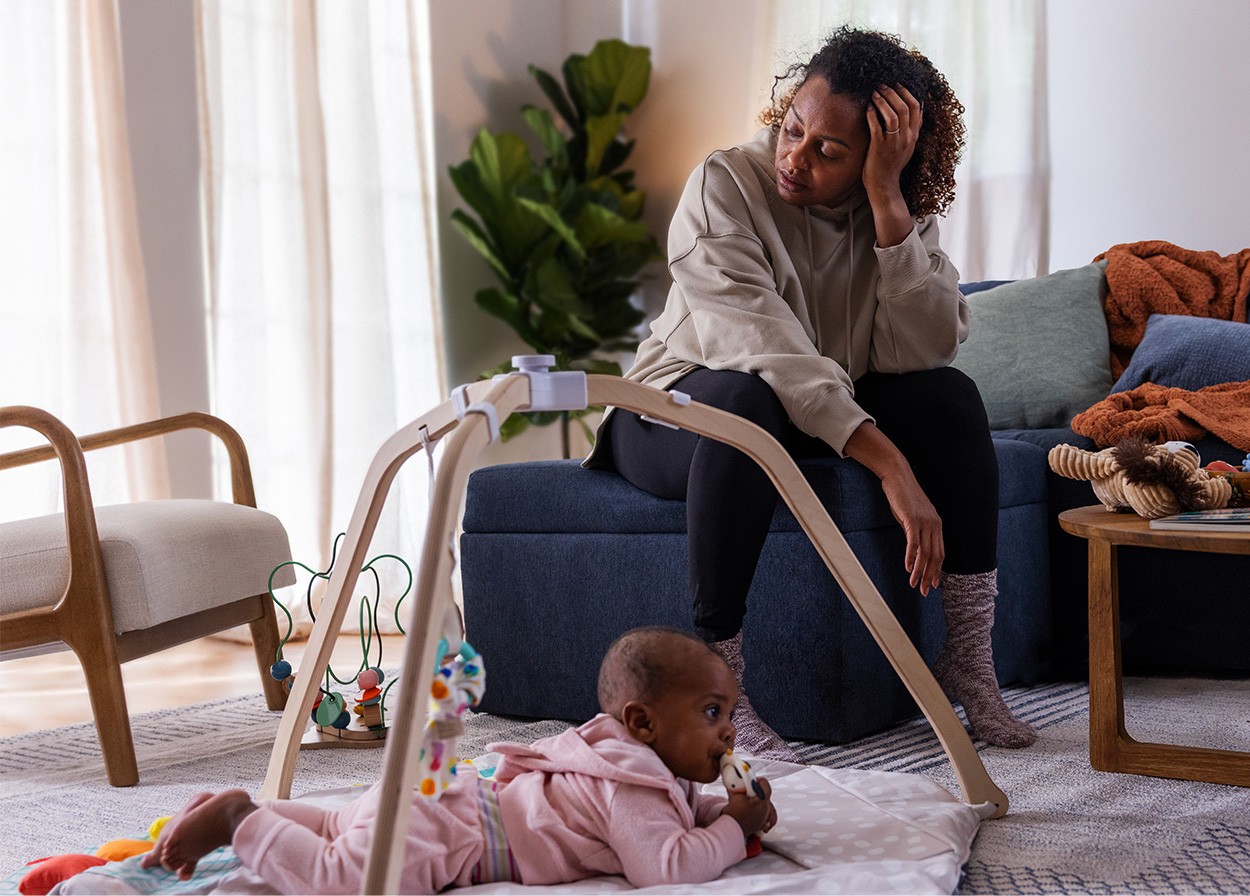
What are the potential causes and risk factors for postpartum depression?
PPD can affect any pregnant or postpartum woman. While PPD does not have a single cause, there are several risk factors it may be associated with, such as:
 Hormonal changes due to pregnancy
 Personal or family history of depression, or depression during previous pregnancy
 Physical and emotional demands of childbirth and caring for a new baby
 Life stressors, such as a lack of help from a partner or family, low social support, and financial stress
How long could a woman be at risk for
postpartum depression?
Most women with PPD had symptoms start within the first few weeks after birth, which is the most common period of onset, but symptoms can appear during pregnancy. However, women may remain at risk for postpartum depression throughout the entire first year after giving birth.
Who can experience
postpartum depression?
PPD can affect any woman regardless of age, ethnicity, marital status, or income. It can also affect women who haven't been previously diagnosed with depression.